
From Awareness to Prevention: Moving Mental Health from Talk to Action
24 June 2026
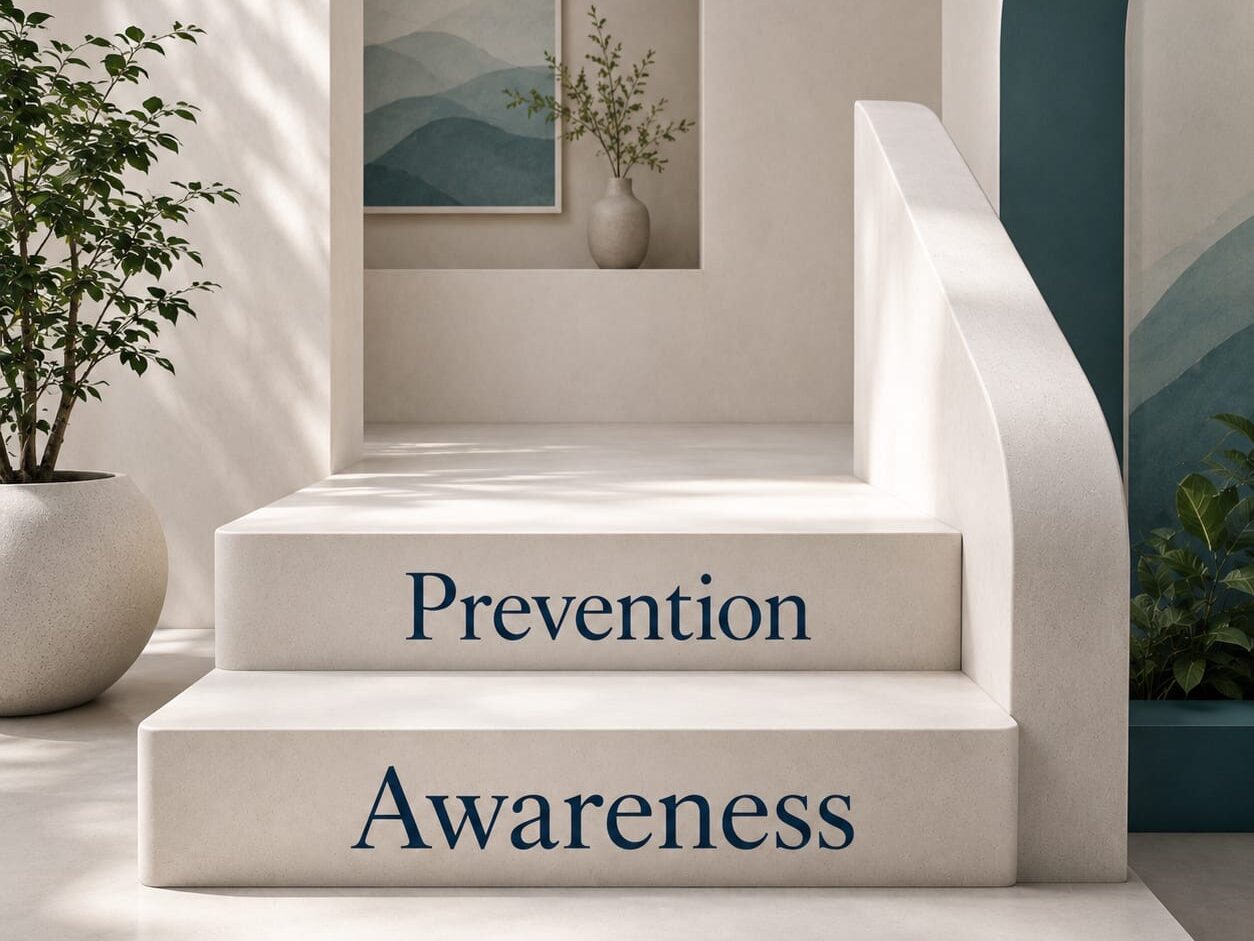
For years, mental health advocacy had one central goal: get people talking. And in many ways, that mission has worked.
Awareness opened the door. Prevention must now walk through it.
Mental health is no longer hidden in the way it once was. People are speaking more openly about stress, anxiety, burnout, loneliness and emotional pressure. Workplaces are acknowledging wellbeing. Schools are recognising that young people carry emotional weight. Families are slowly having conversations that previous generations often avoided altogether.
That progress matters enormously. The mental health conversation has genuinely shifted culture.
But now a new question has emerged — one that I believe defines the next chapter of this work: what happens after awareness?
If more people are talking about mental health, yet more people are also struggling, then awareness alone cannot be the finish line. It must become the starting point for something more practical: earlier support, earlier education, healthier environments, and action before crisis.
📊 According to the Ipsos Health Service Report 2025, mental health is now seen as the top health concern across 30 countries — identified by 45% of people, ahead of cancer (41%) and obesity (25%).
So the question is no longer only: how do we get people talking?
The question now is: how do we move from talk to action before people reach crisis point?
Mental health is no longer hidden — but it is not yet protected
Awareness has done something important. It has given people language for what they are feeling. It has reduced some of the shame. It has validated that emotional pain is real, even when it cannot be seen on a scan.
But awareness has limits.
A poster saying ‘it’s okay to talk’ may open the door, but it cannot sit with someone at 2am when anxiety is racing through their body. A workplace wellbeing day may raise awareness, but it does not automatically change a culture of overwork, poor boundaries or silent burnout. A school assembly may tell young people that mental health matters, but it does not teach them how to recognise pressure before it overwhelms them.
This is where the gap sits. We have become better at naming the problem. We now need to become better at preventing the crisis.
Crisis does not always look like crisis
One reason we respond too late is because we expect crisis to be obvious — a visible breakdown, an emergency, someone clearly unable to cope.
But crisis often builds quietly.
It may begin with poor sleep. Then irritability. Then withdrawal. Then emotional numbness. Then a slow, steady exhaustion. The person who once seemed to manage everything starts disappearing inside themselves — while from the outside, they still look fine. They still answer emails, attend meetings, care for children, smile in photographs, and say: ‘I’m okay.’
Many people are functioning and struggling at the same time. That is not weakness. That is what unaddressed pressure looks like over time.
📊 The World Health Organization reported in 2025 that more than 1 billion people are living with mental health disorders worldwide, with anxiety and depression creating a serious human and economic burden.
Behind that figure are real people trying to keep going while carrying pressure that others may never see. If we only respond when distress becomes visible, we are already too late.
Prevention must mean something practical
We all know the phrase: prevention is better than cure. It is true. But because we have heard it so often, it can become background noise — something we nod at rather than act on.
In mental health, prevention has to mean something tangible. It means noticing pressure before it becomes breakdown. It means teaching emotional skills before people are overwhelmed. It means creating workplaces where wellbeing is part of daily leadership, not just a policy document. It means helping young people understand stress before it becomes their identity. It means building communities where connection exists before isolation deepens.
Most emotional pressure does not begin in a hospital or a clinic. It builds in ordinary places — homes, classrooms, offices, phones, relationships, finances, expectations, and the private thoughts people carry every single day.
That is where prevention must also live.
Prevention is not the opposite of crisis care. It is what should happen before crisis care is needed.
Prevention is not blame
This matters, and it needs to be said clearly.
Talking about prevention must never become another way of blaming people for struggling. Mental health is shaped by many factors that are often outside an individual’s control: trauma, grief, poverty, discrimination, work pressure, family stress, loneliness, physical illness, social isolation, and access to support.
No one should be told they are struggling because they failed to ‘think positively’ or ‘be stronger’.
Prevention should not sound like: You should have coped better.
It should sound like: You should not have had to wait until crisis before support, tools and understanding were available.
That is the difference. Prevention is not blame. Prevention is earlier care.
Personal responsibility still has a place
At the same time, removing personal responsibility from the conversation entirely does not serve people well.
In physical health, we accept that daily habits matter. We may not control every outcome, but we recognise the value of movement, rest, nutrition, and paying attention to early warning signs. Mental wellbeing deserves the same honesty.
We need to learn what pressure looks like in ourselves. We need to notice when we are consistently exhausted, numb, irritable, anxious or overwhelmed — and treat those signals as information rather than inconveniences. We need to stop treating stress as a badge of honour. We need to ask for help before we feel completely alone.
This is not about blame. It is about agency — giving people real tools to protect their minds, not only react when things fall apart.
The strongest prevention happens when two things come together: people are given tools, and environments become healthier. One without the other is not enough.
Waiting has a real cost
When support comes too late, the cost is not only personal. Families carry it. Workplaces carry it. Schools carry it. Communities carry it. Public services carry it.
A burnt-out employee is not just an individual problem — it may reflect a culture of sustained pressure with no outlet. An anxious student is not just a private struggle — it may reflect a system that teaches content but not coping. A lonely older adult is not someone who simply needs to ‘get out more’ — they may be living in a community where meaningful connection has quietly eroded.
📊 The World Health Organization states that more than 720,000 people die by suicide every year, and it is the third leading cause of death among 15–29-year-olds globally.
That statistic must be handled with care. Not every mental health struggle leads to crisis, and this issue should never be oversimplified. But it is a reminder that early support, safe conversations, practical tools and human connection are not optional extras. They are urgent necessities.
The questions prevention asks
The next stage of mental health work cannot only be about encouraging people to speak up. It has to ask harder, more specific questions.
What helps someone notice stress before it becomes burnout? What helps a young person manage pressure before they shut down? What helps a workplace reduce harm, not just respond to absence? What helps families talk before silence becomes distance? What helps communities create belonging before loneliness takes hold?
These are prevention questions. They move us away from awareness as a campaign and towards prevention as a culture.
Mental wellness must start before crisis
The world is already talking about mental health. That matters more than we sometimes acknowledge. But it is not enough on its own.
If mental health is now one of the world’s biggest concerns, the response cannot be more conversation alone. We need earlier understanding, earlier support, earlier education, and earlier action — in homes, schools, workplaces, and communities.
People should not have to break before they are believed. They should not have to collapse before they are supported. They should not have to reach crisis before mental wellness becomes a priority.
Prevention cannot remain optional. Mental wellness must start before crisis.
Written by Neelam Chawla, Founder and Director of Maxable Global CIC.
References
Ipsos. (2025). Ipsos Health Service Report 2025. Ipsos.
World Health Organization. (2025). Over a billion people living with mental health conditions, services require urgent scale-up.
World Health Organization. (2025). Suicide: Fact sheet.