
Handling Anxiety and Stress at Work
4 August 2026
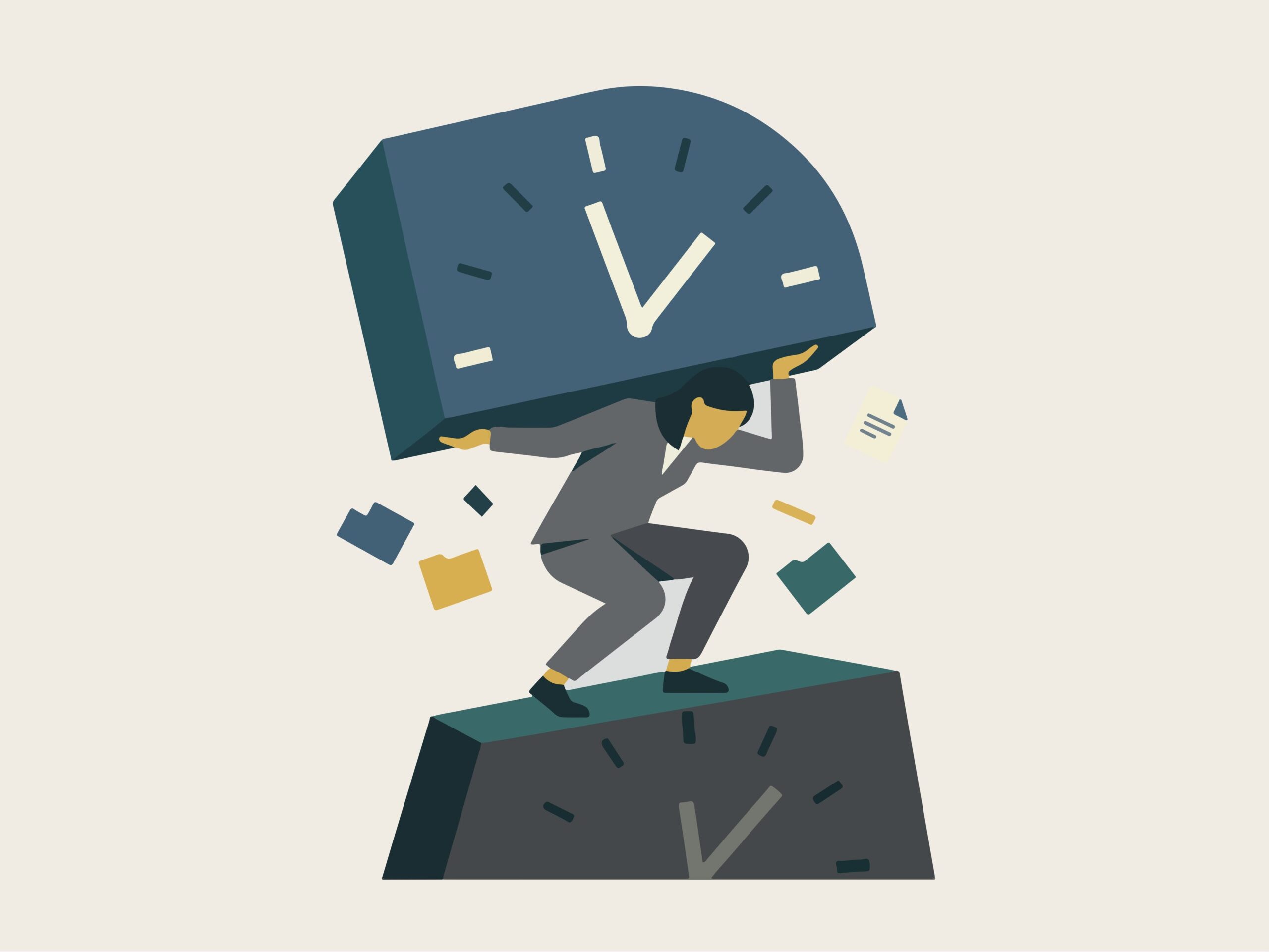
Regardless of your background or profession, experiencing stress and anxiety at work — whether frequently or infrequently — is inevitable. Whilst we cannot always avoid it, we can learn techniques to handle it better.
Previously, we have written about general ways to cope with pressure in everyday life (read more here). In this article, we will explore techniques for dealing with stress at work, including managing anxiety in the moment.
Identify the Cause of Stress
When experiencing stress or anxiety, the first step to take is to reflect on the situation. Through reflection, try to understand what is causing you to feel stressed or anxious.
There could be many aspects of your work that could trigger anxiety, some of which may be outside of your control. It is important to focus on the things that are within your control — dwelling too much on the elements of your job which you cannot change will only prove frustrating.
Once you have identified the sources of stress that are within your control, try to enact changes that can make things more manageable. Depending on the job and the person, helpful changes that can be made may vary greatly — you know yourself better than anyone else, so try to put yourself in touch with your own intuition to determine what would work best for you.
Aside from the more general advice of making changes to the way you work where possible, there are also more specific, concrete techniques that you can employ to tackle stress. We shall now explore some of these.
Breathing Exercises
A simple way to address stress and anxiety in the moment is to use breathing exercises. These exercises can be especially helpful when the cause of your stress may be outside of your control — whilst you may not be able to change the nature of a stressful situation, you can always employ simple, personal self-help techniques to regulate yourself, and ease feelings of anxiety or panic.
The following steps are for an NHS-backed1 calming breathing exercise, which they suggest will provide the most benefit if done regularly, as part of your daily routine. The exercise can be done standing up, sitting down, or lying down. At work, you are likely to be sitting or standing, in which case (either way) you should place both feet flat on the ground, roughly hip-width apart before beginning.
The exercise runs as follows:
- Allow your breath to flow as deep into your belly as is comfortable, taking care not to force it.
- Try to breathe in through your nose, and out through your mouth.
- Take breaths in gently and regularly — you may find it helpful to count steadily from one to five, although you may not be able to reach five at first.
- Then, let your breath flow out gently, counting from one to five again, if you find it helpful.
- Repeat for at least five minutes.
Reframing Problems and Tasks
Heavy workloads, large projects, a mountain of tasks, and increasing pressure — most of us have been there, and know just how stressful it can feel. When you are next in such a scenario, a helpful technique is problem decomposition.
A versatile tool — relied upon by computer scientists and software engineers to solve the most complex problems — problem decomposition can be applied to any type of work, and even to everyday life.
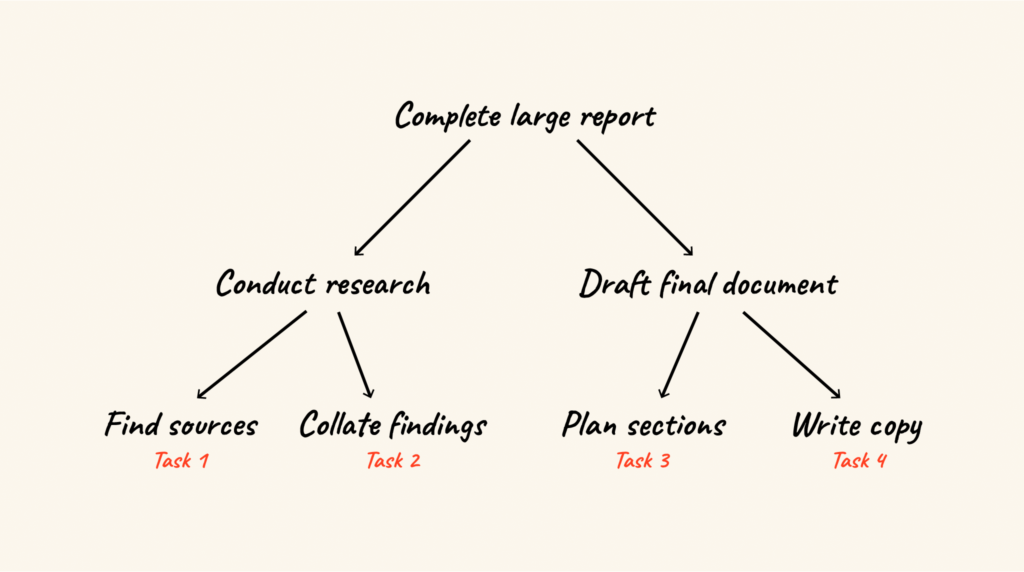
The core idea is to reframe a large problem as a collection of smaller, more manageable tasks — i.e. decomposing it into a set of simpler, less overwhelming items to action. Depending on how easy or challenging you may find this at first, it may be helpful to visualise the decomposition (and organise your thoughts) on paper — this is called drawing a ‘structure diagram’.
To create a structure diagram, start by writing the ‘whole’ problem at the top of the page, and then draw lines down from it to its ‘components’. Repeat the process for each component, until you have a set of manageable tasks at the bottom of the page.
Taking Care of Your General Mental Health
Whilst it may not directly address the elements of your work that provoke stress, it is crucial to be mindful of your overall mental health in everyday life, outside of work — remember, if you do not take care of your mental wellbeing outside of work, negative feelings at work can be magnified.
There are many ways to foster mental wellness, including integrating enjoyable activities into your daily or weekly routines.
Walking or jogging could be particularly attractive ways to improve both your mental and physical health when working, as you could take time for these activities before or after work — you could even incorporate a relaxing walk into your lunch break or daily commute.
In addition to walks, other fun activities to boost your mental wellbeing include attending social functions, dancing, or even playing board games in a relaxed environment. Through various programmes and initiatives, Maxable Global runs events ranging from coffee mornings and games mornings, to dance workshops. In a previous article, we wrote about these initiatives, and how you can join in, which you can read here.
Conclusion
From breathing exercises to problem reframing, we have explored a variety of ways to handle work-related stress and anxiety. There are also many other resources online that you may find useful, including from Mind and the NHS.
If the techniques that we have covered prove helpful to you, then you may consider sharing this article with a friend, colleague, or relative — we started this blog to help as many people as possible by providing free advice to support mental wellbeing, so the more people that we can reach, the better.
Participate in Our Upcoming Programme
At Maxable, it is our mission to empower people to care for their mental wellbeing and manage pressure before the point of crisis. To do this, we explore established research, in addition to conducing our own surveys and studies to better understand how we can help people.
As part of our work, we have developed the Maxable Resilience Framework (M-RF), a tool to help people build mental resilience.
We are currently organising a free pilot programme based on M-RF. If you would like to be invited to partake in the programme, please complete our short, three-minute survey around stress and resilience.
- Source: https://www.nhs.uk/mental-health/self-help/guides-tools-and-activities/breathing-exercises-for-stress/ ↩︎